How much does title insurance cost in Virginia, Maryland, and DC? Here's what buyers actually pay at closing — owner's vs. lender's policies, rate formulas, and how to compare title companies.
Most buyers spend months obsessing over mortgage rates and offer prices. Then they get to the closing table and see a line item called "title insurance premium" — and they have no idea what they're looking at.
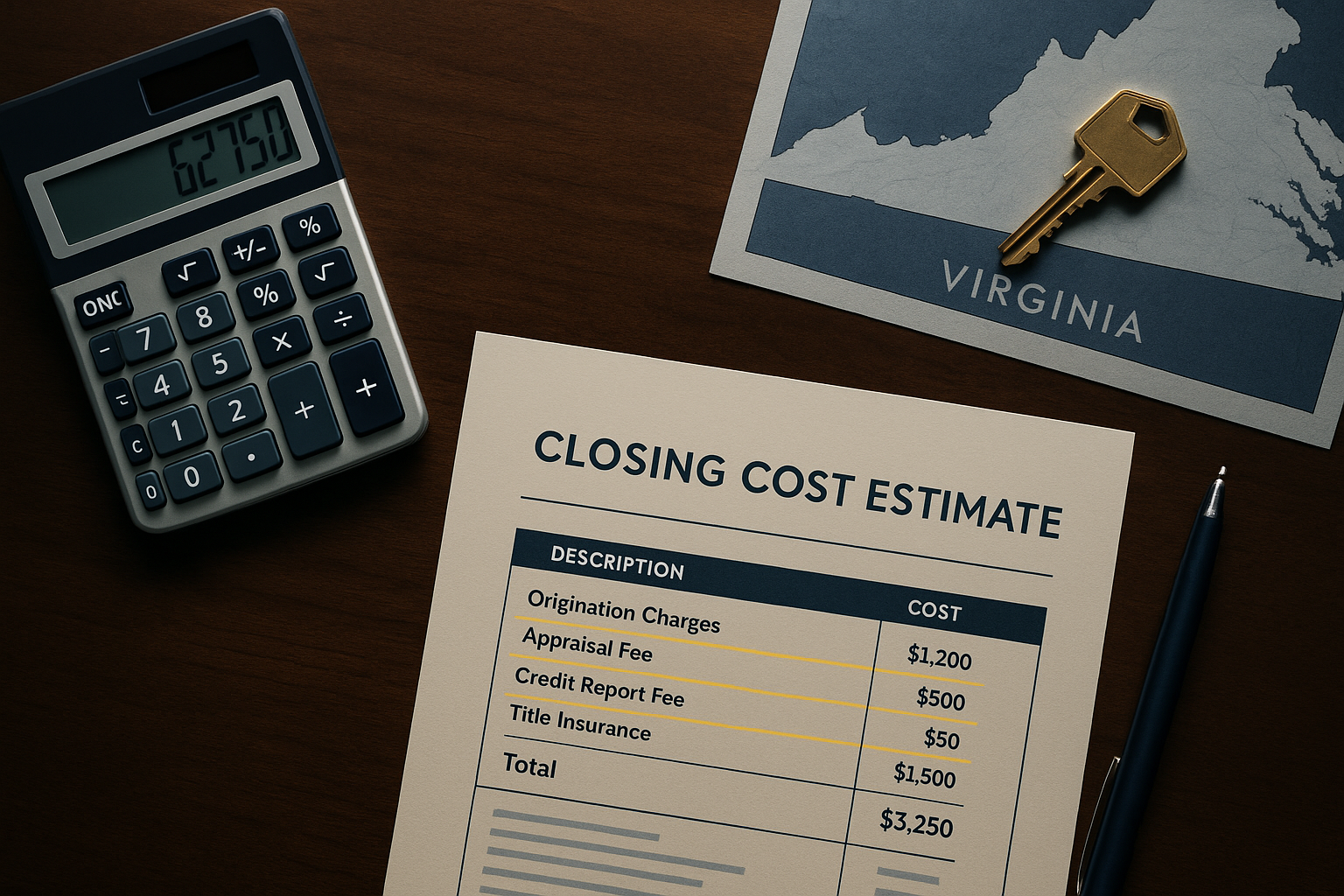
Here's the straightforward answer: title insurance in Virginia typically runs 0.3% to 0.5% of the purchase price, paid once, at closing. On a $600,000 home in Fairfax County, that's roughly $1,800 to $3,000 depending on which policies you're buying and who's doing the work.
But that number alone doesn't tell you much. What actually matters is understanding what you're paying for, what each policy covers, and where the differences show up across Virginia, Maryland, and DC — because they're not the same.
The Two Policies You're Paying For
Every residential transaction involves two separate title insurance policies. They're not interchangeable.
Lender's Policy (Required)
Your mortgage lender requires this. It protects their investment — the loan amount — not yours. If a title claim surfaces after closing, the lender's policy covers the bank. The coverage decreases as you pay down the mortgage. When the loan is paid off, the policy expires.
Owner's Policy (Optional — But Not Really)
This one protects you. It covers your equity and ownership interest for as long as you own the property. Virginia lenders can't require you to buy it, but skipping it is a significant risk. Owner's policies protect against title defects that were already present before you bought — things like an undisclosed heir, a forged deed in the chain of title, or an old mechanics lien that wasn't properly released.
The cost of adding an owner's policy when purchased simultaneously with the lender's policy is minimal. The premium difference is usually a few hundred dollars. The protection lasts as long as you hold the deed.
How Title Insurance Premiums Are Calculated in Virginia
Virginia is a filed-rate state. This means title insurance premiums are set by the underwriting companies (like First American, Fidelity, or Old Republic) and filed with the state's Bureau of Insurance. Title agents cannot negotiate those rates up or down.
What varies from one title company to another — and where the real pricing differences live — are the settlement fees: the title search, exam, closing/settlement fee, and notary charges. These are the line items you can actually compare when shopping title companies.
The owner's policy premium is typically calculated on a rate per thousand dollars of purchase price, on a sliding scale. The rate decreases as the purchase price increases.
- For a $400,000 home, expect roughly $1,400–$1,800 for the owner's policy
- For a $700,000 home, expect roughly $2,000–$2,500 for the owner's policy
- For a $1M+ home, the rate per thousand decreases further
The lender's policy, when purchased simultaneously, is issued at a deeply discounted "simultaneous issue rate" — often $100–$300 for a standard transaction.
Maryland Title Insurance Costs: Key Differences
Transfer and recordation taxes are higher in Maryland — often 1% to 1.5% of the purchase price — which inflates the total closing cost picture compared to Northern Virginia. That can make the title insurance premium look relatively small by comparison.
Maryland buyers can sometimes negotiate seller contribution to closing costs, which occasionally covers part of the title insurance. This is more common in Maryland than in Virginia's competitive market.
Prince George's County and Montgomery County have separate county transfer taxes on top of state transfer taxes, making those closing statements noticeably more expensive than equivalent transactions just across the border in Fairfax.
For Maryland transactions in the $400K–$800K range, combined owner's and lender's policies typically run $1,500–$2,800.
DC Title Insurance: The Outlier
Washington DC operates under its own title insurance regulatory framework. The District does not use the same filed-rate system as Virginia and Maryland. Premiums tend to be slightly lower than surrounding jurisdictions, but the settlement fees and transaction taxes are substantially higher.
DC's 1.45% recordation tax (buyer's side for mortgaged properties) is one of the highest in the region. On a $750,000 condo, that's $10,875 in taxes alone — which often dwarfs the title insurance premium itself.
What Drives the Real Cost Differences
Since the insurance premium itself is regulated, here's where the variability actually lives:
- Title Search: $150–$400 (county records research; complexity varies)
- Title Exam / Abstract: $150–$350 (attorney review of chain of title)
- Settlement/Closing Fee: $400–$900 (the fee to conduct the actual closing)
- Lender's Policy: $100–$300 with simultaneous issue
- Owner's Policy: $1,400–$2,500 (varies by purchase price; filed rate — not negotiable)
- Recording Fees: $25–$75 (county government charge)
Total out-of-pocket for title insurance and settlement services on a typical Northern Virginia purchase: $2,500–$4,500, depending on purchase price and the title company.
What a Title Search Actually Finds
Before issuing any policy, the title company runs a public records search going back — in most cases — 40 to 60 years. They're looking for anything that could cloud your ownership:
- Unreleased liens — a mortgage that was paid off but never properly discharged from the records
- Judgment liens — a creditor who got a court judgment and attached it to the property
- Mechanics liens — a contractor who worked on the home and never got paid
- Estate issues — a prior owner who died and whose heir never signed a proper deed
- Forgery or fraud — a fraudulent deed somewhere in the chain of title
- Easements and encroachments — rights of way or structures that cross property lines
Most searches come back clean. But "most" isn't "all." And when there's a problem, it's almost always discovered at the worst possible moment — right before closing, or after you've already moved in.
How to Compare Title Companies (Without Getting Burned)
Since the insurance premium is fixed, here's what to actually evaluate:
- Ask for a full fee sheet, not just the premium. Request an itemized breakdown of all settlement charges. Some companies advertise low premiums and bury fees in "administrative charges" or "document preparation fees."
- Ask who's doing the search. Some title companies outsource searches to third-party abstractors in other states. Others have in-house search teams with local expertise. Local knowledge matters — especially in jurisdictions with older property records or non-digitized deed books.
- Verify the underwriter. Your title policy is only as good as the financial strength of the underwriting company behind it. The major underwriters — First American, Fidelity National, Old Republic, Stewart — have the reserves to pay claims. Smaller underwriters may not.
- Check their track record with lenders. A good title company should have established relationships with the mortgage lenders active in your market. If the lender has never worked with your title company, expect friction and potential delays.
- Don't let your agent pick based on convenience. In Virginia, you have the right to select your own title company. Your agent or lender may recommend one — and that recommendation may or may not be in your best interest. Make your own inquiry.
The Bottom Line for DMV Buyers
Title insurance is a one-time cost at closing. On a $600,000 purchase in Northern Virginia, you're looking at roughly $1,800–$2,500 for the owner's policy and another $1,000–$1,500 in settlement fees and services. That's $3,000–$4,000 total, paid once, for coverage that lasts as long as you own the home.
Compare that to what happens if you don't have it and a title defect surfaces two years after closing: legal fees, potential loss of equity, a fight with whoever created the defect in the first place.
The math is straightforward. What isn't straightforward is knowing who to call when you want someone who actually knows Virginia and Maryland property law, who has relationships with the local recorders' offices, and who can close without turning a routine transaction into a fire drill.
That's the part that matters more than the premium.
Frequently Asked Questions
Is title insurance required in Virginia?
The lender's policy is required if you're financing the purchase. The owner's policy is optional, but strongly recommended.
Can I shop around for a lower title insurance rate?
In Virginia and Maryland, the insurance premium itself is filed with the state and is the same across licensed agents. What you can compare is settlement fees, search quality, and service experience.
Who pays for title insurance — buyer or seller?
In Virginia, it's typically the buyer. In Maryland, it varies by custom and negotiation. In DC, both parties pay portions of the transaction costs.
How long does title insurance coverage last?
The owner's policy lasts as long as you or your heirs own the property. The lender's policy lasts until the mortgage is paid off.
What is a title insurance claim?
A claim is filed when a covered title defect surfaces after closing — like a previously unknown lien, an heir who claims ownership, or a recording error. The title company defends you and covers losses up to the policy limit.
Will Rapuano is a title executive at Pruitt Title, serving buyers, agents, and lenders across Virginia, Maryland, and DC. Questions about your specific transaction? Reach out directly at (703) 859-1467 or wrapuano@pruitt-title.com.
Ready to Get a Title Quote?
Pruitt Title serves buyers, sellers, and lenders across Virginia, Maryland, and Washington, DC. We make closing simple.