Wire fraud is the fastest-growing crime targeting homebuyers in the DMV. Learn how scammers steal closing funds, the red flags to watch for, and the exact steps to protect your wire transfer.
You've spent months finding the right house in Northern Virginia or Maryland. You've negotiated the contract, survived the inspection, and cleared underwriting. The finish line is in sight — closing day.
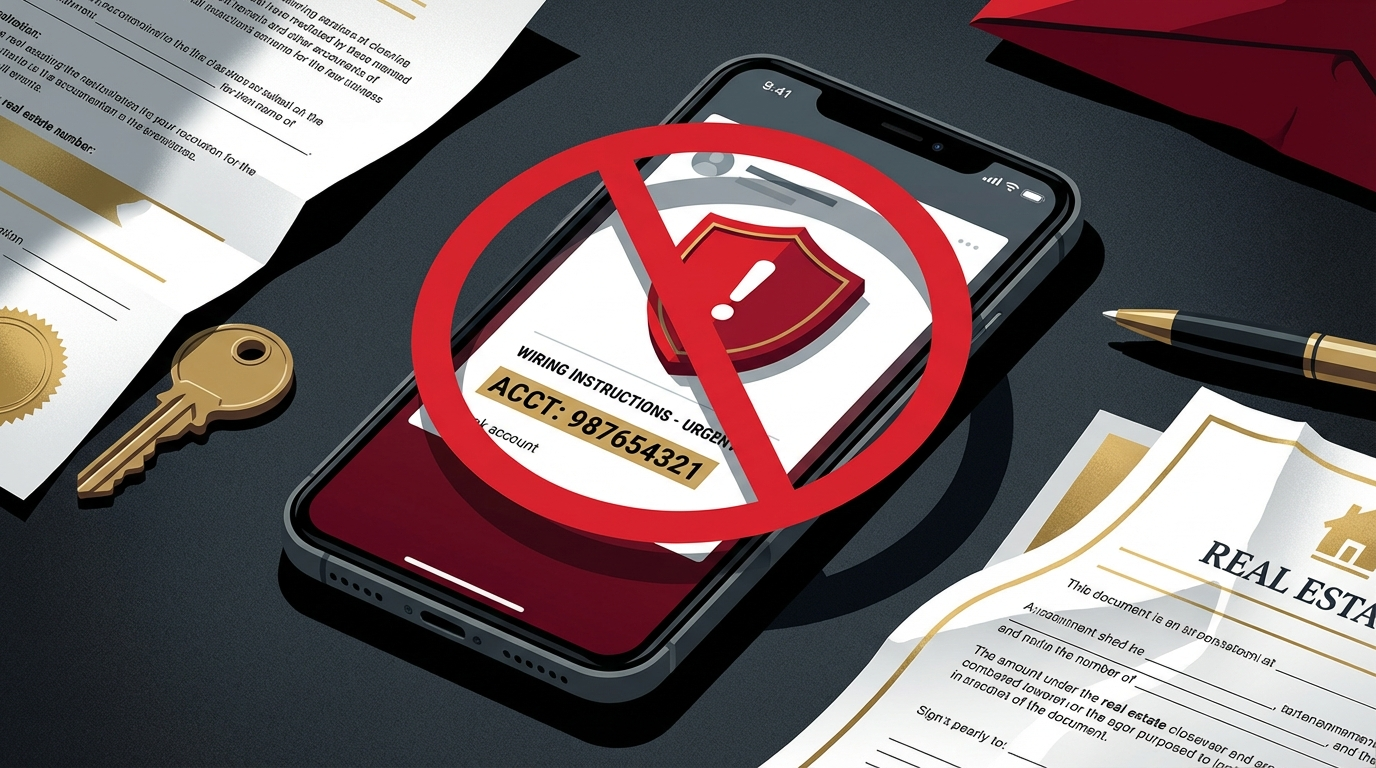
Then your phone buzzes. An email from your title company with updated wiring instructions. The account number is different from what you saw before, but the email looks right. The logo matches. The agent's name is there.
You wire $85,000 and never see it again.
This is wire fraud. And it's the fastest-growing financial crime targeting homebuyers in the country — including right here in the DMV.
How Real Estate Wire Fraud Actually Works
Wire fraud in real estate isn't some exotic cybercrime that only happens to other people. It's methodical, it's targeted, and it works because it exploits the exact moment when you're most distracted: the week before closing.
Here's the playbook scammers follow:
Step 1: Compromise an email account. Fraudsters breach the email of someone in your transaction — your agent, your loan officer, or increasingly, a title company employee. They've been quietly reading your email thread for days or weeks. They know the property address, the closing date, the approximate wire amount, and who everyone is.
Step 2: Send fake wiring instructions. At a carefully timed moment — usually 1-3 days before closing — they impersonate the title company and send updated wiring instructions. The email looks identical to previous correspondence. The difference is one thing: the bank account number.
Step 3: Collect. Once the wire hits their account, the money moves through a chain of domestic and international accounts within hours. Recovery is extremely rare. The FBI's Internet Crime Complaint Center (IC3) estimates that real estate wire fraud caused over $446 million in losses in 2023 alone.
The DMV market is a prime target. High transaction values. High volume. Sophisticated buyers who are busy and trusting of their professional networks.
The Red Flags That Buyers Miss
Most victims say afterward that something felt slightly off — but they were tired, trusting, and eager to close. These are the warning signs that should stop you cold:
Last-minute instruction changes. Legitimate title companies do not change wiring instructions 48 hours before closing. If you receive updated banking details at any point after your initial closing disclosure, treat it as fraud until proven otherwise.
Pressure to wire quickly. "We need this today or closing delays" is a scammer's best line. Urgency is a manipulation tool.
Slightly off email addresses. The fraudster's email might be will@dmvtitleguys.com (note the extra 's') or will@dmvtitleguy.co — close enough to pass a glance, not close enough to pass scrutiny.
Phone numbers in the suspicious email. A fraudulent email will include a phone number — one that routes to the scammer, not your actual title company. Never call a number from a suspicious email.
What You Should Do Instead
The good news: wire fraud is almost entirely preventable with one simple habit.
Call to confirm. Every time. No exceptions.
Before you wire any money, call your title company directly using a phone number you have independently verified — from their website, from a business card, from a previous conversation. Not from the email you just received.
Ask them to confirm:
- The receiving bank name
- The last four digits of the account number
- The exact wire amount
This call takes four minutes. It has saved thousands of buyers from devastating losses.
Verify before every transaction, not just the first one. Scammers know that some buyers verify the first wiring instructions and then assume subsequent changes are safe. They count on that assumption.
Other Protection Steps
Set up a verbal code word with your title company. At DMV Title Guy, we encourage clients to establish a code word at their first meeting. Any changes to closing instructions should require that word — by phone, not email.
Use encrypted communication for sensitive documents. If your title company sends closing instructions via unencrypted email, that's a vulnerability. Ask whether they offer a secure portal.
Review your email security settings. Check whether anyone has forwarded rules or unusual access on your email account. Fraudsters sometimes set up automatic forwards so they can monitor transaction emails invisibly.
Confirm the Closing Disclosure matches wiring instructions. Your Closing Disclosure (required by law to be delivered three business days before closing) will show the exact amount due. The wire amount should match this figure exactly. Any deviation is a red flag.
What Title Companies Should Be Doing
A responsible title company has procedures in place to protect you — and you should ask about them before closing.
At a minimum, look for:
No email-only instruction delivery. Wiring instructions should be delivered through a secure portal or require phone confirmation before any wire is initiated.
Staff training on Business Email Compromise (BEC). This is the FBI's term for the email account breach attacks that enable wire fraud. Title company employees should know the warning signs and have protocols.
Client education at first contact. Before you've even started worrying about wiring money, a good title company has already explained how this works and what they do to prevent it.
Cybersecurity insurance. If the worst happens, some title companies carry coverage that can help with recovery efforts.
Ask your title company these questions directly. Their answers will tell you a lot about how seriously they take your security.
If You've Already Wired to a Fraudulent Account
Time is everything. Banks have a narrow window — sometimes hours — to attempt a recall.
Immediately:
- Call your bank and ask for an emergency wire recall
- File a complaint with the FBI's IC3 at ic3.gov
- Contact your local FBI field office (Washington Field Office: 202-278-2000)
- Notify your title company and real estate agent
- File a police report with your local jurisdiction
Do not delay hoping the situation resolves itself. Every hour the money is in motion makes recovery less likely.
The Bottom Line
Wire fraud works because it targets people at the most stressful moment of one of the biggest financial transactions of their lives. Scammers count on distraction, trust, and urgency.
The counter is simple: slow down for four minutes and call to verify before you wire anything.
If your title company hasn't already talked to you about wire fraud prevention before closing, ask them about it. And if they don't have a clear answer, that's worth knowing too.
At DMV Title Guy, this conversation happens at the start of every transaction — because protecting your money is part of closing your home.
Frequently Asked Questions
How common is wire fraud in real estate closings? The FBI's IC3 reported over $446 million in real estate wire fraud losses in 2023 alone. The DMV market — with its high transaction values — is a frequent target.
Can I recover money lost to wire fraud? Recovery is possible but rare. Speed is critical — contact your bank immediately to attempt a recall, then file with the FBI's IC3. The sooner you act, the better your chances.
Should I wire money based on emailed instructions? Never wire based solely on email instructions. Always call your title company at a verified phone number to confirm before initiating any wire transfer.
What if my title company emails me updated wiring instructions? Treat it as potentially fraudulent until you've verified it by phone using a number from a source other than that email. Legitimate title companies rarely update wiring instructions — if they do, they'll expect your verification call.
How do I verify my title company's phone number? Use the number from their official website, a business card, or a number you've used in a previous verified conversation — not a number from a recent email.
Ready to Get a Title Quote?
Pruitt Title serves buyers, sellers, and lenders across Virginia, Maryland, and Washington, DC. We make closing simple.