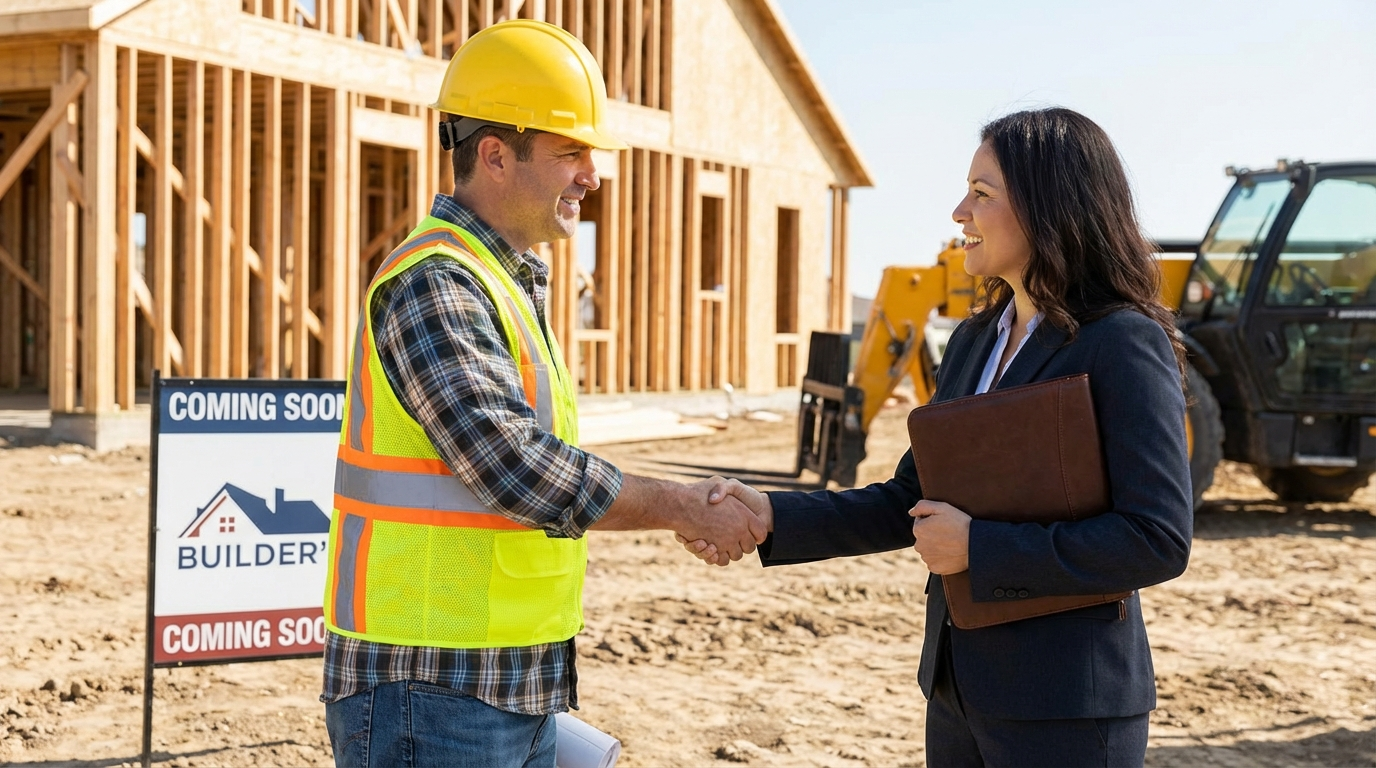
New construction transactions have unique title requirements from lot acquisition through final sale. Here's what builders and their teams need to know about working with a title company.
New Construction Transactions from the Title Company's Chair
From where we sit at the closing table, new construction transactions look different from resales. Not necessarily more complicated — but different in ways that matter for everyone involved.
The Builder Controls the Early Timeline
On new construction, the builder controls almost everything: their contract, their timeline, their preferred title company and lender, and their upgrade selection process.
For title companies, our primary relationship on new construction deals is often with the builder's sales team before it's with the buyer. We know their standard contract terms and their typical close-out schedule.
What buyers should understand: The builder's preferred title company is typically efficient and experienced with that builder's products. The trade-off is that the company's primary customer relationship is with the builder. An independent title company's loyalty is entirely to the buyer.
Both can close your deal successfully. The question is who's advocating for you if there's a dispute.
The Mechanics' Lien Window: Critical Timing
In Virginia, subcontractors and suppliers who weren't paid can file mechanic's liens within a statutory period after the work was completed — even after closing.
This is why:
- Owner's title insurance is important on new construction. A standard owner's policy covers mechanic's liens that arise from work done before closing.
- Final lien waivers from major subcontractors are standard in well-run builder closings. Your title company should confirm these are obtained.
The Construction Loan Payoff
Before your deed can be recorded free and clear, the builder's construction loan must be paid off or the specific lot released. This is coordinated at closing.
When this coordination fails — say, the construction lender's payoff figure was incorrect — the closing can be delayed. Title companies with experience handling builder closings know how to get ahead of these issues.
Reading the Plat and Legal Description
The title examiner confirms that:
- The legal description on the deed matches the recorded plat
- The lot dimensions match the survey
- Any easements on the plat (utility, drainage, open space) are identified and disclosed
Read the plat before closing. Your title company can walk you through it.
HOA Setup and the Declarant's Rights
New construction communities almost always have HOAs — at the point of the first sale, the HOA is typically still controlled by the builder (the "declarant").
Buyers should read the Declaration carefully to understand:
- When control transitions from builder to homeowners
- What assessments are coming
- What architectural restrictions govern exterior changes
- What the initial monthly assessment is and what it covers
If the initial HOA assessment seems very low for the amenities promised, ask about planned increases when the builder-controlled period ends.
What We Tell Buyers in New Construction Closing Meetings
When we sit with a new construction buyer at closing, we make sure they understand:
- What lien protection they have
- The builder's warranty vs. their title insurance coverage
- What easements are on their specific lot
- When the HOA transitions to homeowner control
New construction is a great product. Buying right means understanding the specific risks that come with it — and making sure your protection is in place.
Ready to Get a Title Quote?
Pruitt Title serves buyers, sellers, and lenders across Virginia, Maryland, and Washington, DC. We make closing simple.