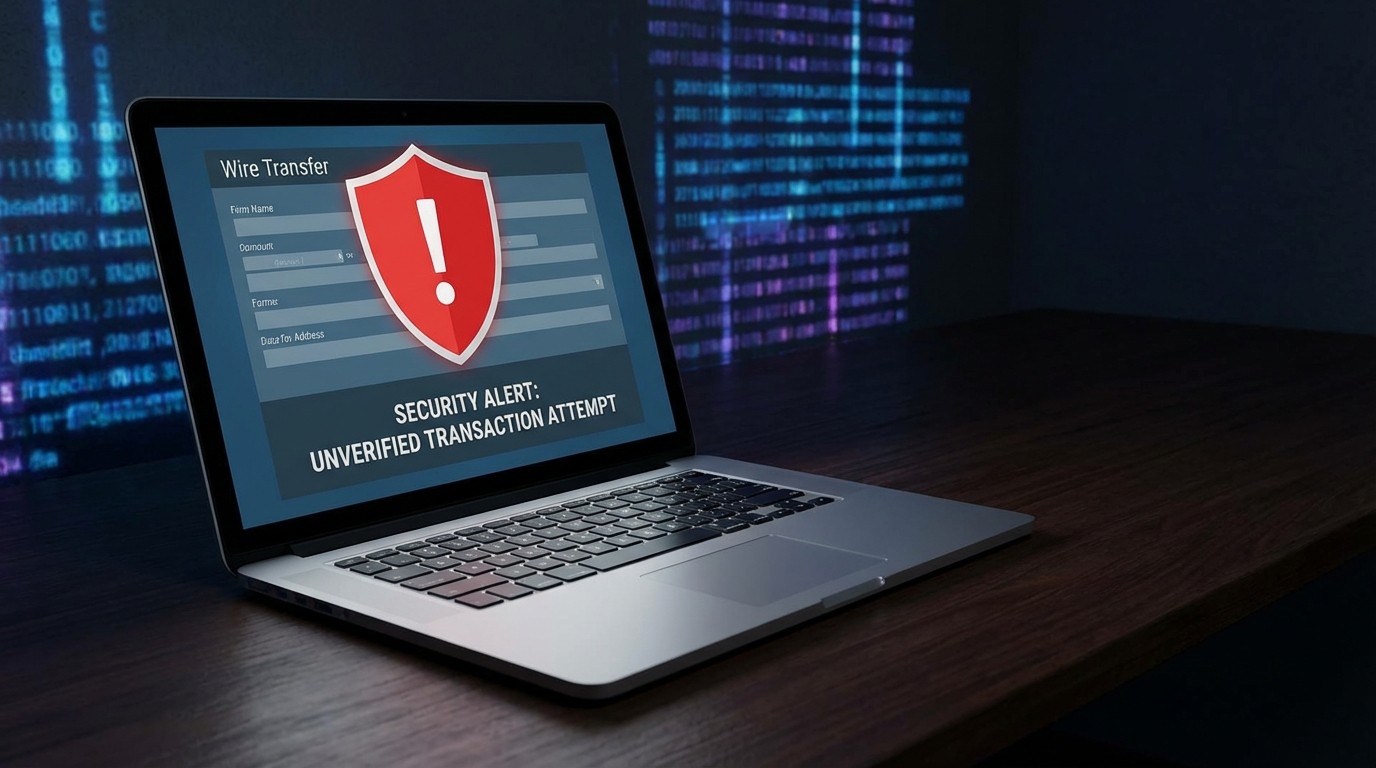
Wire fraud is one of the biggest threats in real estate transactions. Learn the warning signs, prevention strategies, and what to do if you suspect fraudulent activity during a closing.
Wire Fraud Is the Biggest Financial Threat in Real Estate Today
Wire fraud has become one of the most significant financial risks in real estate transactions. The FBI reports that real estate wire fraud results in losses exceeding $400 million annually — and that number is growing.
In the DMV market, where closing costs, down payments, and purchase prices routinely run into the hundreds of thousands, a single compromised wire can be catastrophic.
How Wire Fraud Actually Works
The most common form is Business Email Compromise (BEC). Here's the typical attack:
- A hacker monitors email traffic related to a real estate transaction — often by compromising the email account of an agent, lender, or title company employee.
- They learn the closing date, the buyer's name, and the expected wire amount.
- Shortly before closing, they send an email to the buyer posing as the title company or lender, with updated wiring instructions.
- The buyer wires funds to the fraudster's account.
- Funds are moved quickly through multiple accounts and are almost never recovered.
The fraud works because the email often looks real — same name, similar email address, sometimes even a compromised legitimate account. The instructions arrive at exactly the right time.
The Red Flags That Signal Fraud
Last-minute changes to wiring instructions. Legitimate title companies rarely change wire instructions. If you receive a change to previously communicated instructions — especially shortly before closing — treat it as a potential fraud attempt.
Urgency and pressure. Fraudulent emails often create artificial urgency: "You must wire today or your closing will be delayed."
Slightly different email addresses. Fraudsters often use domains that look almost identical to the real company.
Instructions to wire to an unfamiliar bank. If the title company suddenly has a bank account at an institution you've never heard of, call to verify.
The Verification Protocol That Prevents Fraud
Every buyer wiring money for a real estate closing should follow this protocol:
- Obtain wire instructions from the title company early in the transaction — ideally via a phone call to a number you found independently.
- When you receive wire instructions, always verify them via a separate phone call. Call the title company at a number from their official website — not the number in the email.
- After you wire, confirm receipt by calling your title company before you assume the wire succeeded.
This protocol takes 10 extra minutes. It can save you your entire down payment.
What Real Estate Agents Should Do
Agents have a responsibility to protect their clients from wire fraud.
- Warn your clients at contract ratification. Don't wait until closing week. Have the wire fraud conversation when you go under contract.
- Provide a written warning. Many agents include a wire fraud warning in their buyer paperwork.
- Never send wire instructions via unsecured email.
- Tell your clients to call — always. Reinforce that they should call to verify before sending any funds.
What Title Companies Are Doing
Reputable title companies have implemented security protocols to combat wire fraud:
- Secure portals for delivering wire instructions
- Dual-authorization requirements for outgoing wires
- Callback verification before funds are accepted for settlement
When you're choosing a title company, ask them directly: what security protocols do you have in place to prevent wire fraud?
If You Think You've Been Victimized
Speed is everything. Contact your bank immediately and ask them to recall the wire. File a complaint with the FBI's Internet Crime Complaint Center (IC3) at ic3.gov.
Recovery is difficult but not impossible if action is taken quickly. The best outcome is prevention. The protocol above works. The question is whether you use it.
Ready to Get a Title Quote?
Pruitt Title serves buyers, sellers, and lenders across Virginia, Maryland, and Washington, DC. We make closing simple.