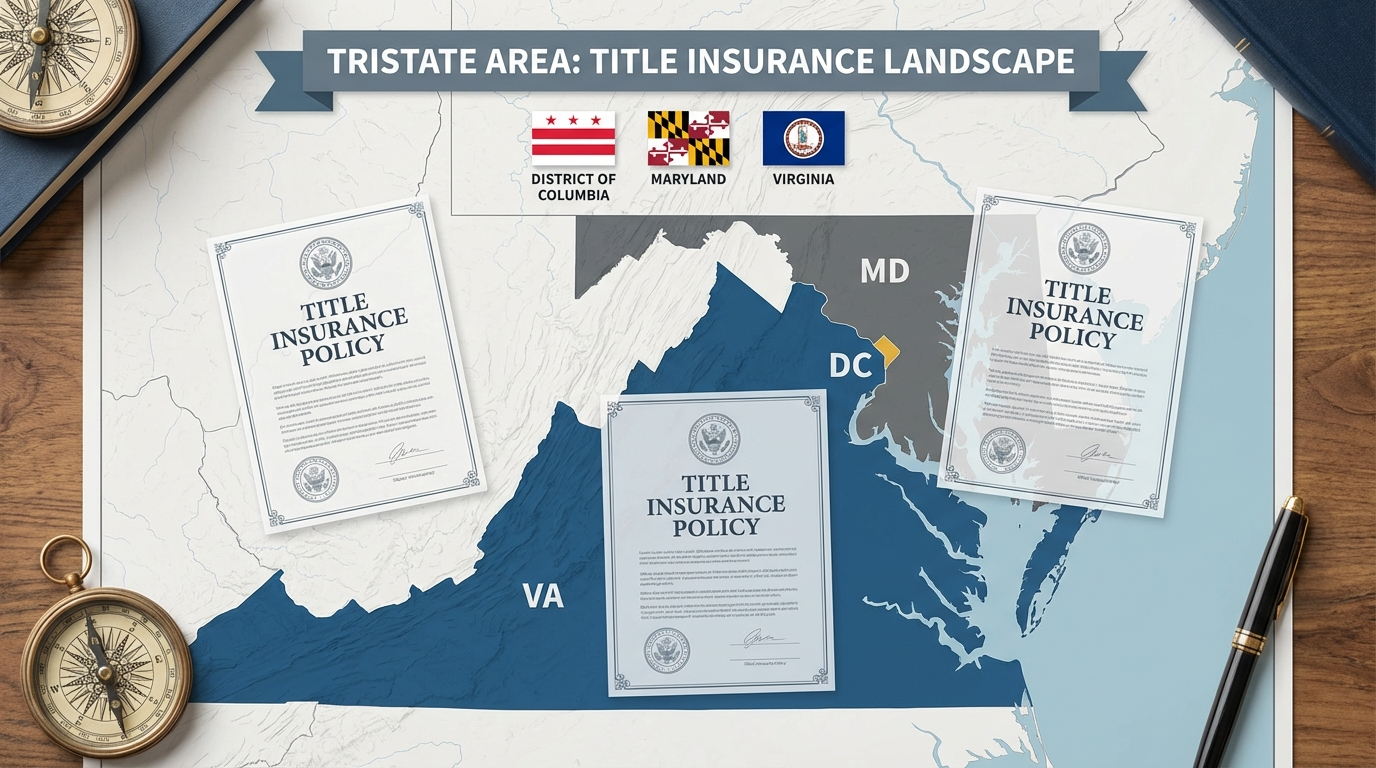
Title insurance requirements differ across DC, Maryland, and Virginia. Here's a jurisdiction-by-jurisdiction comparison to help agents, lenders, and buyers understand their obligations.
Title Insurance Across the DMV: Not One-Size-Fits-All
One of the things that surprises people doing transactions across Virginia, Maryland, and DC is that the rules aren't the same in each jurisdiction. Not just the taxes — the title insurance requirements themselves differ in meaningful ways.
Virginia
Is title insurance required?
Lender's title insurance is required by virtually all mortgage lenders. Owner's title insurance is optional — but strongly recommended.
Who chooses the title company?
In Virginia, buyers have the right to select the title company. This is explicitly protected under Virginia law.
Cost: On a $600,000 purchase, expect $1,500–$2,500 for owner's title insurance. A simultaneous issue discount applies when you purchase lender's and owner's coverage at the same time.
Attorney involvement: Virginia does not require an attorney to be present at closing. However, attorney-supervised closings are common for complex transactions.
Maryland
Is title insurance required?
Lender's coverage is required by lenders; owner's is optional but highly recommended.
Who chooses?
Maryland buyers have the right to select. However, if your lender, broker, or agent has a financial relationship with a title company they're recommending, they must disclose it.
Cost: On a $500,000 purchase, owner's title insurance typically runs $1,400–$2,200. Simultaneous issue discounts apply.
Attorney requirement: Maryland does not require an attorney at closing for residential transactions, but attorneys are commonly used.
Washington, DC
Is title insurance required?
Lender's title insurance is required for all mortgage transactions. DC also has a notably high rate of owner's title insurance adoption because of the complexity of DC real estate.
Cost: On an $800,000 purchase, owner's title insurance typically runs $2,000–$3,500.
Attorney requirement: DC requires that a licensed DC attorney supervise the closing. This is a meaningful distinction from Virginia and Maryland.
DC-specific title issues to watch for:
- Condo association pending assessments and liens
- Historic district covenants and restrictions
- Older properties with chain of title gaps
The Practical Takeaway
If you're working a transaction near a state line — a buyer from Maryland buying in Virginia, or a DC resident purchasing in Fairfax County — make sure your title company has active experience in the specific jurisdiction where the property sits.
Title requirements, recording procedures, tax calculations, and timing all differ.
At DMV Title Guy, we work across all three jurisdictions daily. Call us before you get under contract — we'll tell you exactly what to expect.
Ready to Get a Title Quote?
Pruitt Title serves buyers, sellers, and lenders across Virginia, Maryland, and Washington, DC. We make closing simple.