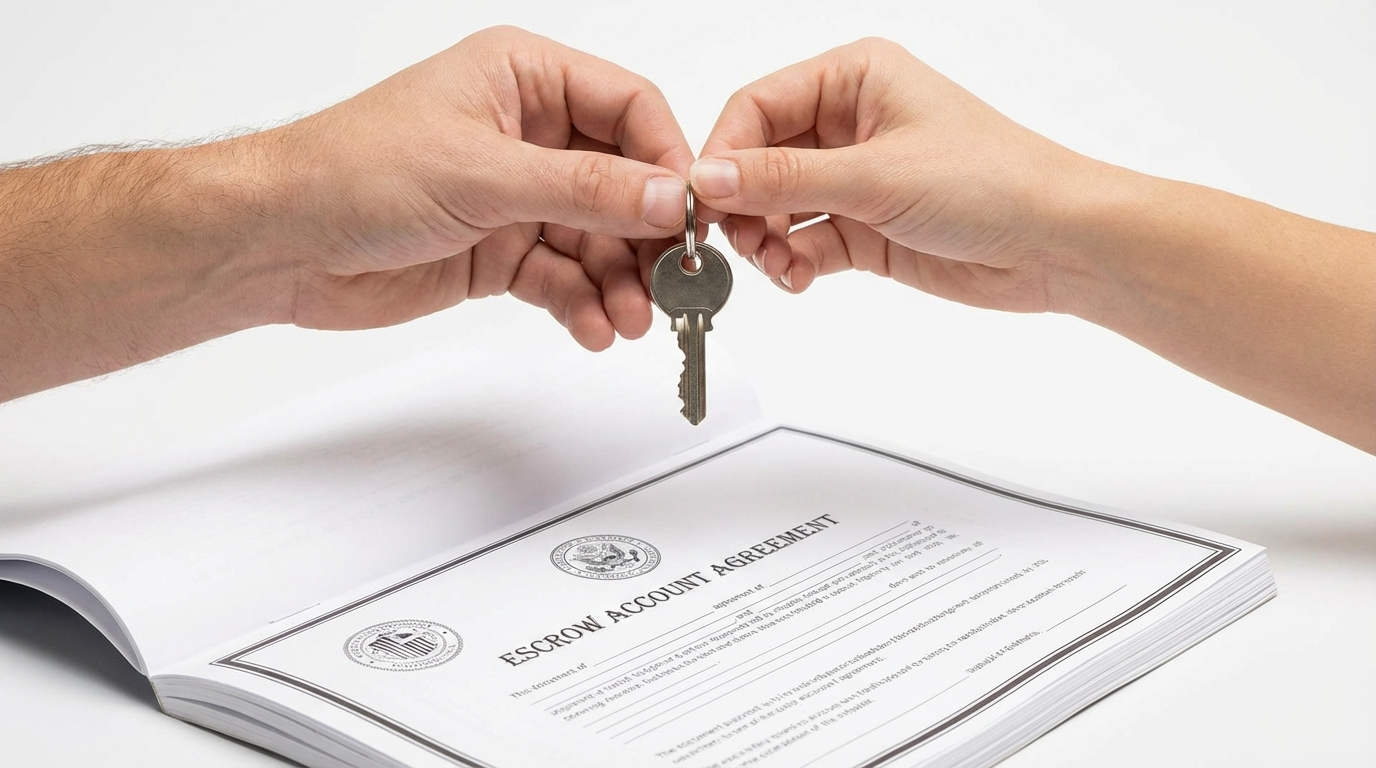
What exactly happens during escrow? This guide walks buyers and sellers through the escrow process step by step, from opening escrow to getting your keys.
What Actually Happens in Escrow
"Your home is in escrow." You've heard the phrase. But unless you've been through the process multiple times, you might not have a clear picture of what escrow actually is, who's holding what, and what needs to happen before you can get your keys.
Here's the plain-English walkthrough.
What Is Escrow?
Escrow is the neutral third-party arrangement that protects both buyer and seller during the period between contract ratification and closing.
A neutral party — the title company or escrow agent — holds the earnest money deposit, manages the closing documents, coordinates between all parties, and ultimately disburses funds and records the deed when all conditions are met.
Note on terminology: In Virginia and Maryland, "settlement" is the more common term for what West Coast states call "escrow." The title company serves as the settlement agent.
The Earnest Money Deposit
The first thing that goes into escrow is the earnest money — a deposit that signals the buyer's serious intent. In the DMV market, it typically runs 1–3% of the purchase price.
The earnest money is held in the escrow account of either the real estate brokerage or the title company. It's not the seller's money yet.
If the deal falls through:
- Buyer walks away for a contingency-approved reason: Earnest money is typically returned to the buyer.
- Buyer walks away without a valid reason: Seller may be entitled to the earnest money.
- Seller backs out: Buyer is entitled to their earnest money back.
The Settlement Period Timeline
Week 1:
- Title company orders the title search
- Buyer schedules home inspection
- Buyer's lender orders the appraisal
Weeks 2–3:
- Inspection completed; repair negotiations if any
- Lender receives appraisal
- Title search completed; title commitment issued
Week 3–4:
- Lender issues clear to close
- Title company prepares settlement documents
- Buyer receives Closing Disclosure (required 3 business days before closing)
- Final walk-through scheduled
Closing day:
- Buyer and seller sign closing documents
- Buyer wires closing funds
- Title company disburses proceeds to seller
- Deed recorded at the courthouse
- Keys change hands
What Can Delay the Escrow Period
Title issues: A lien that needs to be paid off, an estate issue requiring additional documentation.
Financing delays: Underwriting conditions, additional documentation requests, appraisal issues. One of the most common sources of closing pushbacks.
Inspection negotiations: Repair requests and credits that take time to negotiate.
HOA document delays: Some HOA management companies are slow to produce estoppel letters and resale certificates.
The Day Before Closing
If you're the buyer:
- Read your Closing Disclosure carefully. Compare it to your Loan Estimate.
- Confirm wire instructions by phone. Call the title company directly at a number from their official website — not from the email. Wire fraud is real.
- Do your final walk-through. Confirm the property is in agreed-upon condition.
- Arrange your funds. Wire transfers typically need to be sent by early morning on closing day.
What Happens at the Closing Table
In Virginia and Maryland, you'll typically have the settlement agent, the buyers, the sellers, and the real estate agents. In DC, a licensed DC attorney must be present.
You'll sign the deed, the deed of trust, the ALTA settlement statement, and approximately 40 other documents. Plan for 60–90 minutes.
After signing, funds are disbursed and the deed is recorded. In Virginia and Maryland, recording typically happens the same day. In DC, it may take 24–48 hours.
Keys at recording. Welcome home.
Ready to Get a Title Quote?
Pruitt Title serves buyers, sellers, and lenders across Virginia, Maryland, and Washington, DC. We make closing simple.